Follow Greenville Nursing and Rehabilitation on Facebook! Click Here

To see a list of frequently asked questions please Click Here

Greenville | Nursing & Rehabilitation

Latest News

Latest News

Success Story: Owen Logsdon

May 27, 2025

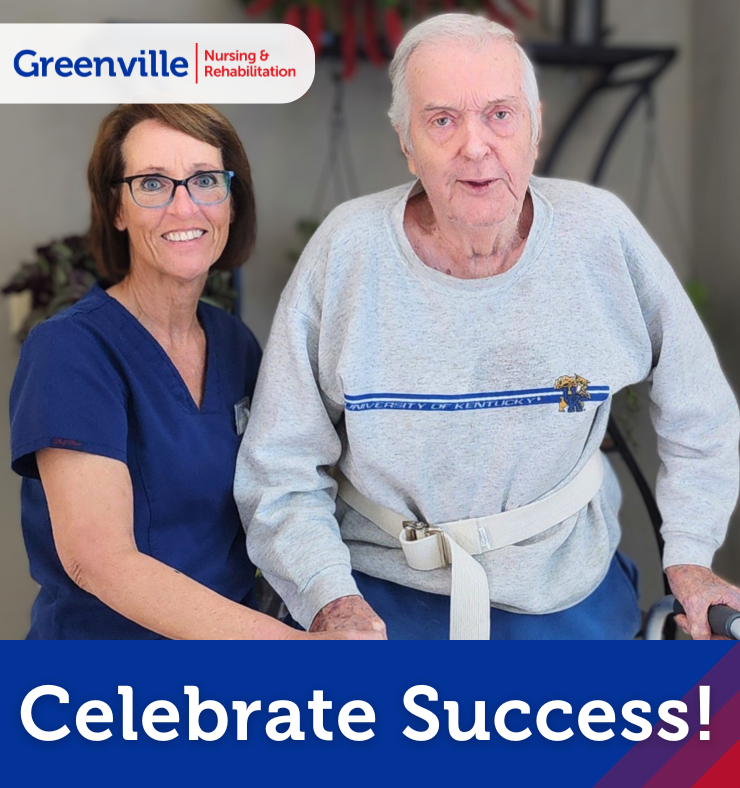
Greenville Nursing and Rehabilitation is excited to share resident Owen Logsdon’s Success Story!

Mr. Owen Logsdon has been a valued Long-Term Care resident at Greenville Nursing and Rehabilitation since January 23, 2025. Upon admission, Owen required significant assistance with functional mobility and daily self-care tasks due to decreased endurance, muscle weakness, and limited balance.

Since his arrival, Owen has participated in both Physical and Occupational Therapy to improve his upper and lower body strength, endurance, and balance. His commitment to therapy has been truly inspiring—he often asks to attend extra sessions and approaches each day with motivation and a positive attitude.

Thanks to his hard work, Owen has made tremendous progress! He now requires only standby assistance for transfers, ambulation, and essential daily activities. Beyond therapy, Owen is a beloved part of our community. He enjoys socializing with fellow residents and is a regular at community activities—especially Bingo, his favorite! We are grateful to have Owen with us and look forward to many more wonderful moments together!

Tips for Getting and Staying Active as You Age

May 19, 2025

Deciding to be physically active at any age is a positive choice for your well-being and has many important health benefits. As part of an active lifestyle, older adults should include a combination of exercise types. Even small amounts of activity throughout the day count toward the 150 minutes of moderate-intensity aerobic activity and two days of muscle-strengthening activities recommended each week.

Starting and maintaining a change in your routine can be hard. Fortunately, there are strategies to help you increase your physical activity levels. Use these tips for getting and staying active.

Take it slow

It’s important to increase your amount of physical activity gradually over a period of weeks to months. To reduce the risk of injury, start with lower-intensity activities that are appropriate for your current fitness level. Then increase the frequency, intensity, and duration of activities over time. Working your way up slowly and steadily can also help to build confidence, motivation, and a regular routine. When there is a break in your routine, perhaps due to illness or travel, work back up gradually.

Older adults who do not have an existing injury or chronic condition, and who plan to gradually increase their amounts of physical activity, generally do not need to talk with a doctor before becoming physically active. However, for people with or without chronic conditions, doctors and exercise professionals can:

  • Assess current physical activity levels
  • Provide advice on appropriate types of activities and ways to progress at a safe and steady pace
  • Offer continued support through follow-up appointments

As with increasing physical activity, it is also important to be gradual with the exercises themselves. Warming up before exercise and cooling down after exercise is recommended to help prevent injuries and other negative health events, such as heart attack or stroke. A warm-up prepares the muscles for exercise and allows the heart rate and breathing to increase gradually. A cool-down after activity allows a gradual decrease at the end.

Set goals and monitor progress

To help meet your goals, you can track and record your physical activity. Doing so daily can provide valuable information about progress toward achieving weekly physical activity goals. You can use a device (for example, a step counter) or keep a written log. Some people choose to share their activity with a friend, doctor, or exercise professional for further accountability and feedback. Remember to also celebrate successes!

Setting goals for your physical activity can encourage you to achieve increased physical activity levels, starting from your current level. Goals are most useful when they are specific and realistic. This type of goal setting can help update a general goal, such as to increase physical activity, into a measurable and actionable goal, such as to go for a 10-minute walk three times per week. Be sure to review your goals regularly as you make progress.

Identify and overcome barriers

Older adults may face barriers that prevent them from being physically active. Some people don’t know about or have access to safe places to be active, facilities or equipment can be costly, and some people may have concerns about their ability, getting injured, or falling. Other common barriers include time, weather, and interest.

The first step to help overcome obstacles preventing physical activity is to identify potential barriers for you. Problem-solving, potentially with advice from a doctor or exercise professional, can help address the identified barriers with specific solutions. It’s also important to reassess barriers over time, as situations change.

The chart below lists some possible barriers, along with examples of solutions. Apply the same sort of problem-solving to other barriers that might reduce your level of activity.

BarrierSolution
Bad weather or poor air qualityFind opportunities to walk indoors — at a mall, grocery store, or big-box store. Look for physical activity programs you can access through technology at home, such as doing an online group fitness class through SilverSneakers or the YMCA.
Cost and expensive equipmentTry free online videos. Use items you already have at home (such as books or detergent jugs for muscle-strengthening activity). Find ways to add physical activity to your day without special equipment. For example, do household chores, garden, dance, or play with your grandchildren.
Too tired or low energyPlan activity for parts of the day you feel most energetic. Many older adults feel less fatigue during and after physical activity.
Lack of motivation, enjoyment, or confidenceConsider working with a personal trainer either individually or in a small group to learn proper form and engage in activity with personalized guidance. Try finding social support and accountability by working out with a buddy or joining a virtual community.
Build social support

Group-based physical activity, such as exercise classes, walking groups, or “exercise buddy systems,” not only gets you moving, but also provides opportunities for social engagement, friendship, and emotional support. Social support from friends and family can increase motivation and be a key part of success for older adults working toward increasing their activity levels. Encouragement and interaction work well with physical activity!

Engage in a variety of activities

As part of moving more and sitting less each day, older adults should engage in a variety of activities. This approach can make activity more enjoyable and may reduce the risk of overuse injury. Older adults are also recommended to include a combination of aerobic, muscle-strengthening, and balance activities each week.

Activity can be done through exercise, chores, errands, walking or biking for transportation, or leisure-time physical activity. For example:

  • Playing pickleball with friends
  • Taking the stairs
  • Doing work on the yard
  • Swimming
  • Dancing
  • Carrying groceries
  • Helping care for grandchildren
  • Joining an exercise class

Consider trying both indoor and outdoor activities. Finding multiple ways to build enjoyable activity into your life and participating in activities you enjoy as you age can offer opportunities to increase physical activity.

To learn more, please visit https://www.nia.nih.gov/health/exercise-and-physical-activity/tips-getting-and-staying-active-you-age.

Success Story: Willie “Frank” Green

May 13, 2025

Greenville Nursing and Rehabilitation is thrilled to celebrate the incredible journey of our resident, Willie “Frank” Green!

Frank was admitted in April 2025 following a hospital stay that left him severely deconditioned and unable to safely complete his daily activities. With determination and the support of our amazing physical and occupational therapy teams, Frank worked hard to rebuild his strength, balance, and endurance.

His positive attitude and eagerness in therapy led to remarkable progress—and we’re proud to share that Frank safely returned home to his loving wife on April 18, 2025! Frank’s warm personality and love for conversation brought so much joy to our community. He will be truly missed by everyone here at Greenville, and we wish him continued health, happiness, and success!

How To Choose a Nursing Home or Other Long-Term Care Facility

May 13, 2025

When an older person needs more help than a family member or friend can provide, it may be time to consider moving to a residential (live-in) facility, such as assisted living or a nursing home. Choosing a place to live for long-term care is a big decision. It can be hard to know where to start.

The following are some steps you can take to help find the right place for yourself or a loved one.

Consider the person’s needs and wants

What services are needed now and might be necessary in the future? For example, an older adult may need assistance with everyday activities, physical therapy, nursing care, hospice care, or a special unit for people with memory problems or dementia. If you are unsure, ask a health care provider which services may be most helpful.

What features are important to the person? For example, they may care about meals, social and recreational activities, a religious connection, or staying close to family and friends so they can easily visit.

Talk to friends, family, and others in your area

Ask about their experience with particular long-term care facilities. Were they happy with the care? Health care providers, social workers, religious groups, and support groups in your community may also be able to suggest quality places.

Call and visit different facilities

Once you’ve identified a few possibilities, get in touch with each place on your list. Ask questions about how many people live there and what it costs. Mention any special needs or preferences. Find out whether there is immediate availability or a waiting list.

Before deciding, it’s a good idea to visit several facilities in person. Make plans to meet with the director, nursing director, or other key staff members. Take a copy of the Medicare Nursing Home Checklist (PDF, 115K) to fill out during each facility’s visit. For example, look for:

  • Medicare and Medicaid certification
  • State licensing
  • Accessibility for people with disabilities
  • Residents who look appropriately dressed and well cared for
  • Warm and respectful interaction between staff and residents
  • A clean, fresh-smelling, comfortable, and well-maintained facility

Make a second visit without calling ahead. Try another day of the week or time of day so you will meet other staff members and have an opportunity to attend different activities. Stop by at mealtime. If there is a dining room, is it attractive and clean? Does the food look appetizing, and can you sample it?

Ask questions during your visits

Don’t be afraid to ask questions. Ask about anything that is important or concerning. Here are a few ideas for questions to ask the staff:

  • How many care providers are there per resident? What kind of training do they have? How many of them are trained to provide medical care if needed?
  • How long have the director and heads of nursing, food, and social services departments worked at the facility? How often do key staff members turn over?
  • Is there a doctor who checks on residents on a regular basis? How often?
  • What activities are planned for residents during the week and on weekends? Can you attend activities yourself to see what they’re like?
  • Is there a safe place for residents to go outside?
  • How do residents get to medical appointments?
  • If you need it, does the facility have a special unit for people with Alzheimer’s disease or another form of dementia? If so, what kinds of services does it provide?
  • Is there information on state regulations for how care is provided? For example, what happens when there is an infectious disease outbreak requiring quarantine?
Find out about costs and contracts

Each facility is different, so get detailed information about costs and which services are included. Find out if Medicare, Medicaid, or long-term care insurance will pay for any of the costs. The facility may have a financial office that can help you determine what assistance is available. Learn more about paying for long-term care.

Once you select a facility, read the contract carefully. Make sure all the agreements are clear and ask questions about anything you don’t understand. Read over the contract again before signing it.

Resources for choosing a long-term care facility

Do you want to learn more about the options for long-term residential care? These resources can help you get started:

  • Search the Eldercare Locator or call 800-677-1116 for help finding care in your area.
  • Visit LongTermCare.gov for information about housing options for older adults and finding local services.
  • Call your local Area Agency on Aging or department of human services from your state or local government.
  • Use Medicare’s Care Compare tool to find and compare nursing homes and other health care facilities in your state or territory.
  • Check the quality of nursing homes and other health care facilities with the Joint Commission’s Quality Check.

To learn more, please visit https://www.nia.nih.gov/health/assisted-living-and-nursing-homes/how-choose-nursing-home-or-other-long-term-care-facility.

Mental Health Awareness Month: 4 Things to Know About Depression & Older Adults

May 6, 2025

Depression is more than just feeling sad or blue. It’s a serious mood disorder that affects many older adults and requires treatment. Find four things to know about depression below.

Get Immediate Help

If you are thinking about harming yourself, tell someone who can help immediately.

  • Do not isolate yourself.
  • Call a trusted family member or friend.
  • Call 988 or go to a hospital emergency room to get immediate help.
  • Make an appointment with your doctor.

Call or text the 24-hour 988 Suicide & Crisis Lifeline at 988 or 800-273-TALK (800-273-8255). For TTY, use your preferred relay service or dial 711 then 988.

To learn more, please visit https://www.nia.nih.gov/health/mental-and-emotional-health/4-things-know-about-depression-and-older-adults.

Driving Safety for Older Adults

April 29, 2025

While many older adults value the independence of driving, changes that happen with age may alter a person’s ability to drive safely. You may notice driving becoming more difficult over time for yourself or for your loved ones. Changes in health, including medical conditions or injuries, also may impact a person’s driving skills. Learn more about the different factors that can affect driving as you age and signs of when it may be time to stop driving.

Sheila’s Story

At age 78, Sheila thinks she’s still a good driver, but this year, she’s had one minor accident and several near misses. She’s also noticed a few new dents on her car and doesn’t know how they got there. Lately, her daughters have begun offering her to drive her places that she normally goes to on her own. Sheila wants to keep driving as she gets older but is starting to wonder how she can stay safe behind the wheel.

What can change driving ability with age?

Common health conditions and medication side effects may influence your driving skills.

  • Stiff joints and muscles. As you age, your joints may get stiff, and your muscles may weaken. Arthritis, which is common among older adults, might affect your ability to drive. These changes can make it harder to turn your head to look back, turn the steering wheel quickly, or brake safely. If pain, stiffness, or arthritis seem to get in the way of your driving, talk with your doctor. Think about getting hand controls for both the gas and brake pedals if you have leg problems.
  • Trouble seeing. Your eyesight can change as you get older. It might be harder to see people, things, and movement outside your direct line of sight. It may also take longer to read street or traffic signs or even recognize familiar places. At night, you may have trouble seeing things clearly. Glare from oncoming headlights or streetlights can be a problem. Depending on the time of day, the sun might be blinding. Eye diseases, such as glaucoma, cataracts, and macular degeneration, as well as some medicines, can also cause vision problems. If you are 60 or older, get a dilated eye exam from your eye doctor every one to two years. If you need glasses or contact lenses to see far away while driving, make sure your prescription is up to date and correct.
  • Trouble hearing. As you grow older, your hearing can change, making it harder to notice horns, sirens, or even noises coming from your own car. These sounds warn you when you may need to pull over or get out of the way, or when there is a possible mechanical issue with your vehicle. Have your hearing checked at least every three years after age 50 or more frequently if you have had chronic exposure to loud noises or have other risk factors for hearing loss. Discuss your concerns with your doctor as there may be treatments that can help.
  • Medications. Some medicines can make you feel drowsy, lightheaded, or less alert than usual, which can make driving unsafe. Some drugs include a warning about driving, but even those that do not might have a negative effect. Ask your doctor or pharmacist if any of your health problems or medications might make it unsafe for you to drive.
  • Slower reaction time and reflexes. As you get older, your reflexes might get slower, and you might not react as quickly as you could in the past. Stiff joints or weak muscles also can make it harder to move quickly. Loss of feeling or tingling in your fingers and feet can make it difficult to steer or use the foot pedals.
  • Some medical conditions make it unsafe to drive. The uncontrollable movements and loss of coordination and balance due to Parkinson’s disease make it unsafe to drive. Similarly, many of the loss of control of limbs or other movement limitations following a stroke can mean it is no longer safe to drive.
Tips for older adults to drive safely

Maybe you already know that driving at night or in rainy weather is a problem for you. Some older drivers also have problems with certain routes or driving on busy highways, for example. Consider these tips to help you make safe choices about driving:

  • Talk with your doctor. If you have any concerns about your health and driving, see your doctor. Don’t risk hurting yourself or others.
  • Be physically active. This will help you keep and even improve your strength and flexibility, which may help your driving abilities.
  • Consider your car. If possible, drive a car with automatic transmission, power steering, power brakes, and large mirrors. Newer cars come equipped with backup cameras, which can make parking and backing up easier, as well as other sensors that can alert a driver to a nearby object or vehicle before an accident occurs.
  • Take care of your eyes and ears. Always wear your glasses or contact lenses if you need them to see clearly. If you use hearing aids, be sure to wear them while driving.
  • Avoid driving certain times of day. Cut back on or stop driving at night if you have trouble seeing in the dark. Try to avoid driving during sunrise and sunset, when the sun can be directly in your line of vision.
  • Check in with yourself. Don’t drive if you feel lightheaded or drowsy. Be sure to check any warnings on your medications. Try to avoid driving when you are stressed or tired.
  • Don’t crowd. Leave ample space between your car and the car in front of you and start braking early when you need to stop.
  • Plan your timing. Avoid heavy traffic areas or rush-hour driving when you can.
  • Plan your route. Drive on streets you know and find a way to go that requires few or no left turns. Choose a route that avoids highways or other high-speed roadways. If you must drive on a fast-moving highway, drive in the right-hand lane, where traffic moves more slowly.
  • When in doubt, don’t go out. Bad weather, such as rain, ice, or snow, can make it hard for anyone to drive. Try to wait until the weather is better, or use buses, taxis, ridesharing services, or other alternatives.
  • Wear seat belts. Always wear your seat belt and make sure your passengers wear theirs, too.
  • Limit distractions. Eating, adjusting the radio, or chatting can all be distracting. If you use your cellphone while driving (for navigation, for example), use it hands-free and use voice activation when possible. Never type on your phone while driving.
  • Use window defrosters. These will help keep windows and windshields clear.
How to check and improve your driving skills

Are you concerned that your driving skills are declining or could be improved? Consider the following:

  • Have your driving skills checked by a driving rehabilitation specialist, occupational therapist, or other trained professional. The American Occupational Therapy Association maintains a national database of driving specialists, or you can ask your state’s Department of Motor Vehicles or your doctor to recommend someone who can test your driving skills. Note that there may be fees associated with these types of assessments.
  • The American Automobile Association’s (AAA) RoadWise Driver Course is designed to help older adults adjust to age-related physical changes to extend their safe driving career.
  • Try an online self-assessment, such as this one from the National Highway Traffic Safety Administration (NHTSA), to gauge your abilities.
  • Ask your family and friends for feedback about your driving, including any concerns.
  • Take a driver safety course. Some car insurance companies may even lower your bill when you complete this type of class. Organizations such as AARP or your car insurance company can help you find a nearby resource.
Signs your loved one should no longer be driving

Are you worried about an older family member or friend driving? It can be hard for some people to recognize or admit when it’s no longer safe to drive. You might want to observe the person’s driving skills or ask them to consider doing a self-assessment of their driving. If it’s not possible to directly observe the person’s driving, watch for these signs:

  • Multiple vehicle crashes, near misses, or new dents or scrapes on the car
  • Two or more traffic tickets or warnings within the last two years
  • Increases in car insurance premiums because of driving issues
  • Comments from neighbors or friends about erratic, unsafe, or aggressive driving
  • Anxiety about driving at night
  • Health issues that might affect driving, including problems with vision, hearing, and movement
  • Complaints about the speed, sudden lane changes, or actions of other drivers
  • Recommendations from a doctor to modify driving habits or quit driving entirely
Having “the talk” about driving

Talking with an older person about his or her driving is often difficult. For many older adults, “giving up the keys” means a loss of freedom of choice and movement. Many people are afraid of being dependent upon someone else for getting around. They worry about losing the ability to run errands, attend appointments, and participate in activities that they did on their own for decades. They may be concerned about becoming socially isolated and missing out.

Here are some tips that might help when talking with someone about no longer driving:

  • Be prepared. Learn about local community services to help someone who can no longer drive before you have the conversation with them. Identify the person’s transportation needs.
  • Avoid confrontation. Use “I” messages rather than “you” messages. For example, say, “I am concerned about your safety when you are driving,” rather than, “You’re no longer a safe driver.”
  • Stick to the issue. Discuss the driver’s skills, not their age.
  • Focus on safety and maintaining independence. Be clear that the goal is for the older driver to continue the activities they currently enjoy while staying safe. Offer to help the person stay independent. For example, you might say, “I’ll help you figure out how to get where you want to go if driving isn’t possible.”
  • Be positive and supportive. Recognize the importance of a driver’s license to the older person. Realize they may become defensive, angry, hurt, or withdrawn during your conversation. You might say, “I understand that this may be upsetting,” or “Let’s work together to find a solution.”
  • Consider broaching the topic gradually. Some experts suggest a gentle introduction of the driving conversation, and then revisiting it gradually over time.

The NHTSA has a helpful guide to help concerned families and friends better understand older drivers and suggestions on how to begin discussions.

Is it time to give up driving?

We all age differently, and for this reason, there is not one recommended age to quit driving. So how does one know when to stop? To help decide, ask yourself:

  • Do other drivers often honk at me?
  • Have I had some accidents even if just “fender benders”?
  • Am I having trouble seeing road signs, exits, or lane lines?
  • Am I still flexible enough to turn my head to check mirrors and blind spots comfortably?
  • Have physical conditions or medications slowed my reaction time?
  • Do I get lost frequently, even on familiar roads?
  • Do cars or pedestrians seem to appear out of nowhere?
  • Am I often distracted while driving?
  • Have family, friends, or my doctor said they’re worried about my driving?
  • Am I driving less these days because I’m not as sure about my driving as I used to be?
  • Do I have trouble staying in my lane?
  • Do I have trouble moving my foot between the gas and the brake pedals, or do I sometimes confuse the two?
  • Have I been pulled over by a police officer about my driving?

If you answered “yes” to any of these questions, it may be time to talk with your doctor or family members about your driving, or to consider a driving assessment.

How will you get around?

Are you worried you won’t be able to do the things you want and need to do if you stop driving? Many people have this concern, but there may be more ways to get around than you think. For example, some areas provide free or low-cost bus, subway, rideshare, and taxi services for older people. Some communities offer a carpool service or scheduled trips to the grocery store, mall, or doctor’s offices. Religious and civic groups sometimes have volunteers who will drive you where you want to go.

If you have a smartphone or a computer, you could consider using mobile apps available for services like meal, grocery, or prescription deliveries. Most of these are paid services but may have free or lower-cost options for some older adults.

Your local Area Agency on Aging can help you find local services. Call 800-677-1116 or search the Eldercare Locator online. You also can try searching Rides In Sight or calling 855-607-4337, a service of the nonprofit ITN America that provides information about transportation options for older adults.

You can also think about using a car or ridesharing service. While these may sound pricey, remember that owning a car can be expensive. If you no longer need to make car payments or pay for insurance, maintenance, gas, oil, tolls, and other related expenses, then you may be able to afford other transportation or to buy gas for friends and family members who provide rides.

To learn more, please visit https://www.nia.nih.gov/health/safety/safe-driving-older-adults.

Sucess Story: Jonell Lear

April 21, 2025

Greenville Nursing and Rehabilitation is excited to share resident Jonell Lear’s Success Story!

Ms. Jonell Lear was admitted to Greenville Nursing and Rehabilitation on February 14, after experiencing a CVA and craniotomy for a meningioma, which affected her mobility, daily activities, and safety awareness. Upon arrival, she required significant assistance with bed mobility, transfers, bathing, dressing, toileting, and grooming, as well as thickened liquids during meals.

Determined to regain her independence and return to her husband, Ms. Lear worked hard in her Physical, Occupational, and Speech therapy sessions. Her dedication paid off quickly—within just a few weeks, she was able to complete bed mobility, transfers, and ambulate with a rolling walker, all with minimal help. She was also upgraded to thin liquids and needed much less assistance with safety awareness.

On March 4, 2025, Ms. Lear was discharged home, excited to continue her recovery with her family. The staff and residents at Greenville Nursing and Rehabilitation will certainly miss her bright smile and lively conversations. We wish her all the best as she moves forward!

Coping With Grief and Loss

April 21, 2025

When someone close to you dies, your world changes. You are in mourning — feeling grief and sorrow at the loss. You may feel numb, shocked, and fearful. You may feel guilty for being the one who is still alive. You may even feel angry at your loved one for leaving you. All of these feelings are normal. There are no rules about how you should feel. There is no right or wrong way to mourn.

When you grieve, you can feel both physical and emotional pain. People who are grieving often cry easily and can have:

As time passes, you may still miss your loved one. But for most people, the intense pain will lessen. There will be good and bad days. You may feel guilty or surprised for laughing at a joke or enjoying a visit with a friend. It is important to understand that these can be common feelings.

Finding a support system

There are many ways to grieve and to learn to accept loss. Try not to ignore your grief. Support may be available until you can manage your grief on your own.

While family and compassionate friends can be supportive, they may be grieving, too. Some people find that sharing memories and stories about the person who is gone is one way to help each other. Sometimes, people hesitate to bring up the loss or mention the name of the person who died because they worry this can be hurtful. But many people may find it helpful to talk directly about their loss. You are all coping with the death of someone who was important in your lives.

What is complicated grief?

It is normal to feel sad, numb, or lost for a while after someone close to you dies. But for some people, mourning can go on so long or be so distressing that it becomes unhealthy. This prolonged and intense reaction to loss is known as complicated grief. People with this condition may be unable to comprehend or accept the loss, experience intense sorrow and emotional pain, and have trouble resuming their own life and making plans for the future. Other signs of complicated grief may include having overwhelmingly negative emotions, feeling preoccupied with the person who died or the circumstances of the death, and being unable to find meaning or a purpose in life.

Complicated grief can be a serious condition. Those who have it may need additional help to overcome the loss. If sadness is making it difficult for you to carry on in your day-to-day life, help is available. Reach out to a support group, mental health professional, or loved ones for support. If cost is a factor for you, ask your doctor or other healthcare provider if they know of any local health professionals or programs that offer low-cost or free help.

How grief counseling can help

Some people find that grief counseling makes it easier to work through their sorrow. Regular talk therapy with a grief counselor or therapist can help those who are grieving learn to accept a death.

There are also support groups for grieving people to help each other. These groups can be specialized — people who have lost loved ones to Alzheimer’s disease, for example — or they can be for anyone learning to manage grief. Check with local hospitals and senior centers, nursing homes, religious groups, funeral homes, or your doctor to find support groups in your area. Hospice care professionals can also provide grief counseling, sometimes called bereavement support, to the family of someone who was under their care. You can also ask hospice workers for bereavement support even if hospice was not used before the death.

For older adults who are socially isolated or have limited family nearby, there are resources available. Try one of the suggestions below:

  • Online support groups. Many online forums or support groups online are free and can help offer support from the home.
  • Online therapy or counseling sessions. If you’re looking for a therapist or counselor to address your grief or loss, many offer online sessions that you can attend from your home.
  • Support books. Books can be a great way to understand grief and sorrow, and they can provide tips to help overcome these feelings. Check your local library or ask a librarian for recommendations.
  • Community resources. Some communities offer grief and loss counseling or resources. Check with your local community center, senior center, faith community, or hospital to learn about what they offer.
Taking care of yourself while grieving

In the beginning, you may find that taking care of details and keeping busy helps. For a while, family and friends may be around to assist you. But there comes a time when you will need to face the change in your life.

Here are some ideas to keep in mind:

  • Take care of yourself. Grief can be hard on your health. Exercise regularly, eat healthy food, and try to get enough sleep. Bad habits, such as drinking too much alcohol or smoking, can put your health at risk.
  • Make mealtime plans. Some people who have lost a loved one lose interest in cooking and eating. Sometimes eating at home alone feels too quiet, so it may help to have lunch with friends. Turning on the radio or TV during meals can also help. For information on nutrition and cooking for one, look for books at your local library, bookstore, or online.
  • Talk with caring friends. Let family and friends know when you want to talk about your loved one. When possible, accept their offers of help and company.
  • Participate in your favorite activities. Doing things you enjoy, such as painting, biking, volunteering, or social club events can help improve overall mood and well-being. Listening to uplifting music may also bring comfort.
  • Reach out to your faith community. Many people who are grieving find comfort in spending time with others who share their religious beliefs, praying, or reading religious or spiritual scripture.
  • See your doctor. Keep up with visits to your healthcare provider. If it has been a while, schedule a check-up and bring your doctor up to date on pre-existing medical conditions and any new health issues that may be of concern. Let your health care provider know if you are having trouble taking care of everyday activities such as personal hygiene and dressing, or fixing meals.
  • Mourning takes time. It’s common to have a roller coaster of emotions for a while.

If you have children, remember that they are grieving, too. It will take time for the whole family to adjust to life without your loved one. You may find that your relationship with your children and their relationships with each other have changed. Open, honest communication is important.

When you feel ready, go through your loved one’s clothes and other personal items. It may be hard to give away these belongings. Instead of parting with everything at once, you might make three piles: one to keep, one to give away, and one “not sure.” Ask your children or others to help. Think about setting aside items such as a special piece of clothing, watch, favorite book, or picture to give to your children or grandchildren as personal reminders of your loved one.

Mourning the loss of a spouse or partner

If you have lost a spouse or partner, you may worry about how you will take care of yourself or your home. Many couples divide up their household tasks. One person may pay bills and handle car repairs. The other may cook meals and mow the lawn. Splitting up jobs often works well until there is only one person who must do it all. Learning to manage new tasks — from chores to household repairs to finances — can take time.

Reaching out to friends and family who are close by to help manage tasks right after your loss can help. If you don’t have loved ones nearby, local organizations may be able to help. The Administration for Community Living (ACL) offers online tools to help connect people with resources in their community. After a while, you may develop a better understanding of how to handle tasks on your own.

Being alone can also increase concerns about safety. It’s a good idea to ensure there are working locks on the doors and windows.

Facing the future without a spouse or partner can be scary, especially for those who have never lived alone. Those who are both widowed and retired may feel very lonely and become depressed. Talk with your doctor about how you are feeling.

Socializing after the death of a loved one

It may be overwhelming to think about going to parties or other social events without your loved one. It can be hard to think about coming home alone. If you were married or had a long-time partner, you may feel anxious about dating. Many people miss the feeling of closeness that marriage or other intimate relationship brings. After time, some may be ready to have a social life again.

Here are some things to remember:

  • Go at a comfortable pace. There’s no rush.
  • It’s okay to make the first move when it comes to planning things to do.
  • Volunteer.
  • Try group activities. Invite friends for a potluck dinner or participate in an activity at a local community or senior center.
  • Consider lower-stress, informal outings such as walks or movies.
  • Find an activity you like. You may have fun and meet people who share your interests.
  • You can develop meaningful relationships with friends and family members of all ages.
  • Many people find that pets provide comforting companionship.
Getting your legal and financial paperwork in order

When you feel ready, you might consider getting your legal and financial affairs in order. If you were married and your spouse died, you may need to update certain legal documents and other paperwork. For example, you might need to:

  • Write a new will and update your advance care planning.
  • Look into a durable power of attorney for legal matters and health care in case you are unable to make your own medical decisions in the future.
  • Put joint property (such as a house or car) in your name.
  • Consider changes you may need to make to your health insurance as well as to your life, car, and homeowner’s insurance.
  • Make a list of bills you will need to pay in the next few months, for example, your rent or mortgage; utilities such as electricity, water, and phone and internet services; insurance; and state and federal taxes.

To learn more, please visit https://www.nia.nih.gov/health/grief-and-mourning/coping-grief-and-loss.

Vascular Dementia: Causes, Symptoms, and Treatments

April 14, 2025

Vascular dementia refers to changes to memory, thinking, and behavior resulting from conditions that affect the blood vessels in the brain. Cognition and brain function can be significantly affected by the size, location, and number of vascular changes.

Symptoms of vascular dementia can begin gradually or can occur suddenly, and then progress over time, with possible short periods of improvement. Vascular dementia can occur alone or be a part of a different diagnosis such as Alzheimer’s disease or other forms of dementia. When an individual is diagnosed with vascular dementia, their symptoms can be similar to the symptoms of Alzheimer’s.

What causes vascular dementia?

Vascular dementia is caused by different conditions that interrupt the flow of blood and oxygen supply to the brain and damage blood vessels in the brain.

People with vascular dementia almost always have abnormalities in the brain that can be seen on MRI scans. These abnormalities can include evidence of prior strokes, which are often small and sometimes without noticeable symptoms. Major strokes can also increase the risk for dementia, but not everyone who has had a stroke will develop dementia.

Other abnormalities commonly found in the brains of people with vascular dementia are diseased small blood vessels and changes in “white matter” — the connecting “wires” of the brain that are critical for relaying messages between brain regions.

Researchers are investigating how these changes in the brain — and their underlying causes — are involved in the onset and progression of dementia. Research has shown a strong link between cardiovascular disease, involving the heart and blood vessels, and cerebrovascular disease, involving the brain, and subsequent cognitive impairment and dementia. This area of research is referred to as “vascular contributions to cognitive impairment and dementia,” or VCID. It is helping researchers better understand this connection and whether the methods used to prevent and treat cerebrovascular disease and heart disease could also help prevent dementia. Researchers investigating VCID are exploring diverse conditions that affect blood flow to and within the brain, including infarcts (an area of dead tissue resulting from a lack of blood supply), hemorrhages (bleeding from ruptured or damaged blood vessels), cerebral hypoperfusion (reduced blood flow), and small vessel disease in the brain such as that thought to be associated with white matter hyperintensities (white patches seen on brain MRI scans), and stroke.

What are the symptoms of vascular dementia?

People with vascular dementia may experience:

  • Difficulty performing tasks that used to be easy, such as paying bills
  • Trouble following instructions or learning new information and routines
  • Forgetting current or past events
  • Misplacing items
  • Getting lost on familiar routes
  • Problems with language, such as finding the right word or using the wrong word
  • Changes in sleep patterns
  • Difficulty reading and writing
  • Loss of interest in things or people
  • Changes in personality, behavior, and mood, such as depression, agitation, and anger
  • Hallucinations or delusions (believing something is real that is not)
  • Poor judgment and loss of ability to perceive danger
How is vascular dementia treated?

Because many different disease processes can result in different forms of vascular dementia, there may not be one treatment for all. However, vascular dementia is often managed with medications to prevent strokes and reduce the risk of additional brain damage. Some studies suggest that medications that are used to treat Alzheimer’s might benefit some people with an early form of vascular dementia. Treating modifiable risk factors like high blood pressurediabetes, high cholesterol, and problems with the rhythm of the heartbeat can help prevent additional stroke. Living a healthy lifestyle is important to help reduce the risk factors of vascular dementia.

To learn more, please visit https://www.nia.nih.gov/health/vascular-dementia/vascular-dementia-causes-symptoms-and-treatments.

Success Story: Harold Bivins

April 10, 2025

Greenville Nursing and Rehabilitation is excited to share resident Harold Bivins’ Success Story!

Mr. Harold Bivins was admitted to Greenville Nursing and Rehabilitation in February following a brief hospital stay. Upon admission, he required increased assistance with transfers, ambulation, and activities of daily living. Through dedicated Physical and Occupational Therapy, Mr. Bivins made remarkable strides in his recovery—gaining strength, improving balance, and building endurance. In just a few weeks, he was able to complete transfers and ambulate with modified independence using a rolling walker or a wheelchair for longer distances. He also began performing daily tasks with minimal assistance.

One of the highlights of Mr. Bivins’ stay is being reunited with his wife, who is also a resident in our community. They cherish spending time together each day. Mr. Bivins has chosen to make Greenville Nursing and Rehabilitation his permanent home, and we are honored to welcome him into our family.